

The widespread prevalence of the COVID-19 pandemic is evident by increasing hospitalizations and untimely demises of people affected. The unprecedented rate at which the disease spreads has brought the entire world to panic. Meantime, the vaccine for COVID-19 is currently the world’s hope, as vaccines help build immunities in people that are vaccinated against the virus and prevent being ill. Generally, a vaccine as a routine and preventive measure, play a significant role in effectively reducing and controlling the viral outbreak affecting the majority of the people. Hence, many laboratories, research facilities, and scientists throughout the world are rushing to develop the vaccine against COVID-19. Sadly, the development and the availability of such a life-saving vaccine may not be possible in a short time like now.
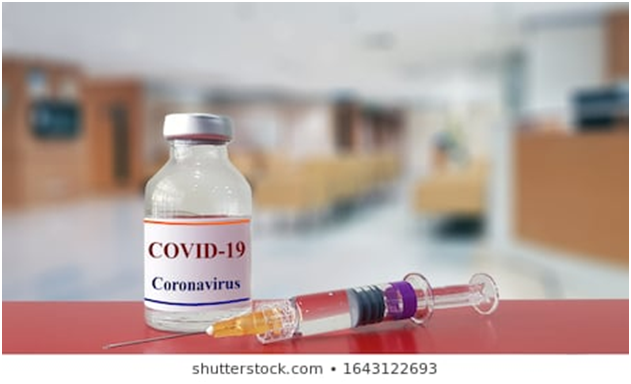
As of today’s date, the World Health Organization (WHO) has list 45 candidate vaccines of COVID-19 in the clinical evaluation phase whereas 156 candidate vaccines in the preclinical evaluation phase. Different vaccine candidates include live attenuated vaccines, mRNA vaccines, DNA vaccines, protein-based vaccines, inactivated vaccines, vaccines involving adenovirus, and other viruses, etc.
Factually, more than thirty-five institutions and companies are leaving no stone unturned to accomplish the successful result. While some of ongoing clinical trials have shown reassuring results, others have posed doubts on the efficacy of the vaccines too. Concerns regarding small study subject size, probable alterations in the animal immune response as compared to humans, and the unavailability of evidences to support no aberrant immune responses after vaccination still remain as a great hurdle to overcome. Therefore, the uncertainty around the successful development of safe and efficacious treatment/preventive regimens is surely one of the biggest challenges in dealing with the SARS-CoV-2.
All promising COVID-19 vaccines must go through large-scale testing in at-risk communities. In general, for a vaccine to be approved or licensed by regulatory authorities, it must pass all the clinical phases. The first clinical trial (phase I) of the vaccine accounts for vaccine safety and immunogenicity during which the vaccine is given to a small group of healthy volunteers (10 to 100). In phase II, safety, immunogenicity, and sometimes preliminary efficacy are assessed in larger cohorts (100‑1,000). Vaccine efficacy is primarily evaluated in phase III studies to determine the proportionate reduction in predefined infection rate or disease events among vaccinated participants (1,000‑100,000). Human challenge methods i.e. deliberately infecting participants with SARS-CoV-2 may shorten the time for Phase II and phase III trials. In phase IV, successful vaccines are continually assessed for their post-licensure, and post-implementation. The successful vaccine will receive approval from Good Manufacturing Practices (GMP), Good clinical practice (GCP), and Food and Drug Administration (FDA).
Some of the common concurrent vaccines under the third clinical phases are listed in the table below.
| S.N. | Vaccine manufacturer | Type of candidate vaccine | Doses | Doses timing |
| 1. | Sinovac | Inactivated | 2 | 0,14 days |
| 2. | Wuhan Institute of Biological Products/Sinopharm | Inactivated | 2 | 0,21 days |
| 3. | Beijing Institute of Biological Products/Sinopharm | Inactivated | 2 | 0,21 days |
| 4. | University of Oxford/AstraZeneca | ChAdOx1-S | 2 | 0,28 days |
| 5. | CanSino Biological Inc./Beijing Institute of Biotechnology | Adenovirus Type 5 Vector | 1 | Not available |
| 6. | Gamaleya Research Institute | Adeno-based (rAd26-S+rAd5-S) | 2 | 0,21 days |
| 7. | Janssen Pharmaceutical Companies | Ad26COVS1 | 2 | 0,56 days |
| 8. | Novavax | Full length recombinant SARS CoV-2 glycoprotein nanoparticle vaccine adjuvanted with Matrix M | 2 | 0,21 days |
| 9. | Moderna/NIAID | LNP-encapsulated mRNA | 2 | 0,28 days |
| 10. | BioNTech/Fosun Pharma/Pfizer | 3 LNP-mRNAs | 2 | 0,28 days |
WHO has estimated 12 to 18 months to create a successful vaccine against the SARS-CoV-2, however, the average time for vaccine development taken from the preclinical phase to the market registration requires 10.71 years. Such unusually set aggressive timelines, which may have emerged from political pressures and/or societal needs, may hasten the laboratory testing that may end up creating another health issue and other multiple complications. A historical example of rushed polio vaccines out of the testing phase, which afflicted a large percentage of people with an entirely different disease called simian virus 40 (SV40) should be considered as of pinnacle model. Moreover, an outcome of competition rather than the more productive cooperative process; however, if, fails to protect and exacerbates COVID-19 disease, a ferocious public backlash against vaccines, in general, is obvious.
A challenge apart from the invention of a successful vaccine will be to produce and distribute the vaccine around the world at a larger scale rapidly and equitably. Coherently, the production and purification of recombinant proteins in the doses needed to immunize large populations are likely to be slower and more challenging. Henceforth, scientists, and companies responsible for vaccine development must be aware that one created under pressure may cause more setbacks than needed.
Conclusively, all the above information demonstrates that much more work needs to be done for the COVID-19 vaccine development in the future including increasing the number of animals in clinical trials to collect statistically significant data; defining the best animal model for studying SARS-CoV-2 as well as proving the COVID-19 vaccine safety and effectiveness in human. Although scientists and researchers are working collaboratively to develop a highly efficacious and desirable vaccine, the COVID-19 related sentiments should not affect any aspects of the genuine testing and approval standards and must target for the ideal vaccine, which is of ease to administer, facile to produce, and scale-up along with long-term storage. Therefore, all due care must be taken before finalizing a vaccine to be commercialized.
Research & Written By : Ajaya Basnet (MSc Medical Microbiology), Arun B. Chand (MSc Medical Microbiology)